 Opera Houses in Italy
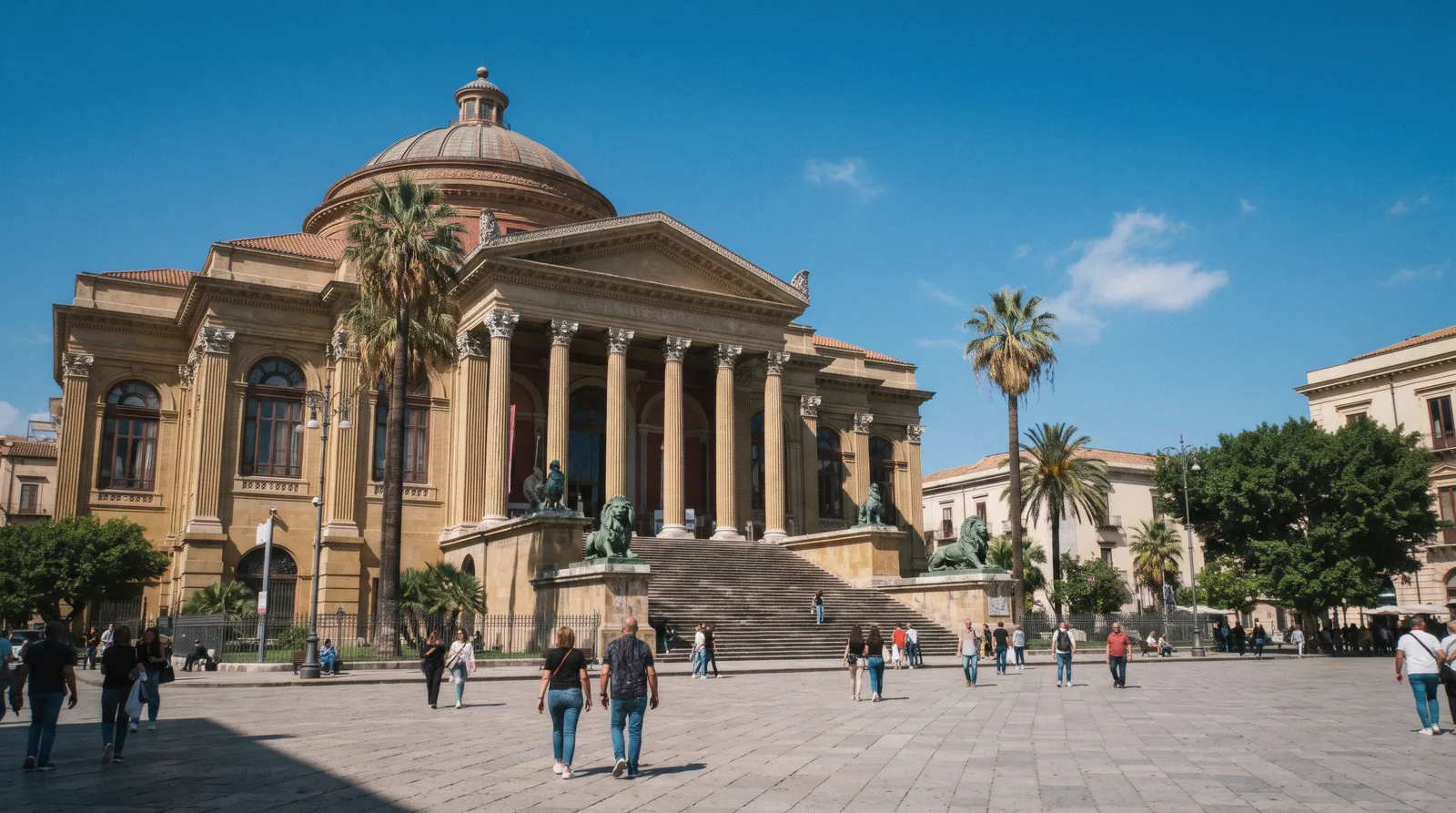
The Teatro Massimo on Piazza Verdi is the largest opera house in Italy and the third largest in Europe. It opened in 1897 after 22 years of building and is famous for its acoustics and for the final scene of The Godfather Part III. This guide covers the Teatro Massimo guided tour, the official prices, the visiting hours and what you actually see inside. For the full list, see our guide to the opera houses in Italy.
Quick answer Teatro Massimo in brief
The Teatro Massimo is the largest opera house in Italy, opened in 1897 on Piazza Verdi in Palermo. Visits are by guided tour only: about 40 minutes, every day from 09:30 to 19:00 with the last tour at 18:20.
Key takeaways
- Book the Teatro Massimo guided tour at $16 per person, 4.5 stars from over 2,100 reviews.
- The theatre is fully accessible and children under 6 go free. See more on Italian opera houses.
- Want opera at night instead? Compare opera tours in Italy or read opera tickets in Italy.
Key facts
Opening hours
| Guided tours, every day | 09:30–19:00 |
|---|
Closed Last tour 18:20
Planning it
- Time needed
- Our estimate: 40 minutes for the tour, about an hour with the steps and photos
- Book ahead
- Optional — walk-up usually fine
- Address
- Piazza Verdi, 90138 Palermo
Teatro Massimo tickets compared
The Teatro Massimo can only be seen inside on a guided tour, and this is the tour we sell for the theatre itself, listed on GetYourGuide. The table shows what it costs, how long it lasts and what you get.
Do you want a guided look inside the opera house, or a night of opera arias elsewhere in Sicily?
| Option | Price | Length | Includes | Book |
|---|---|---|---|---|
| Palermo: Teatro Massimo Opera House Guided TourAnyone who wants to see the auditorium, the royal box and the Pompeian room with a guide | $16 per person | About 40 minutes | Guided visit of the auditorium and the halls, groups of up to 20, five languages | Check Availability |
Figures current in Q4 2026.
Opera experiences around Palermo and eastern Sicily
The theatre visit is the day activity. If you also want music in the evening, these are the opera concerts you can book in Sicily.
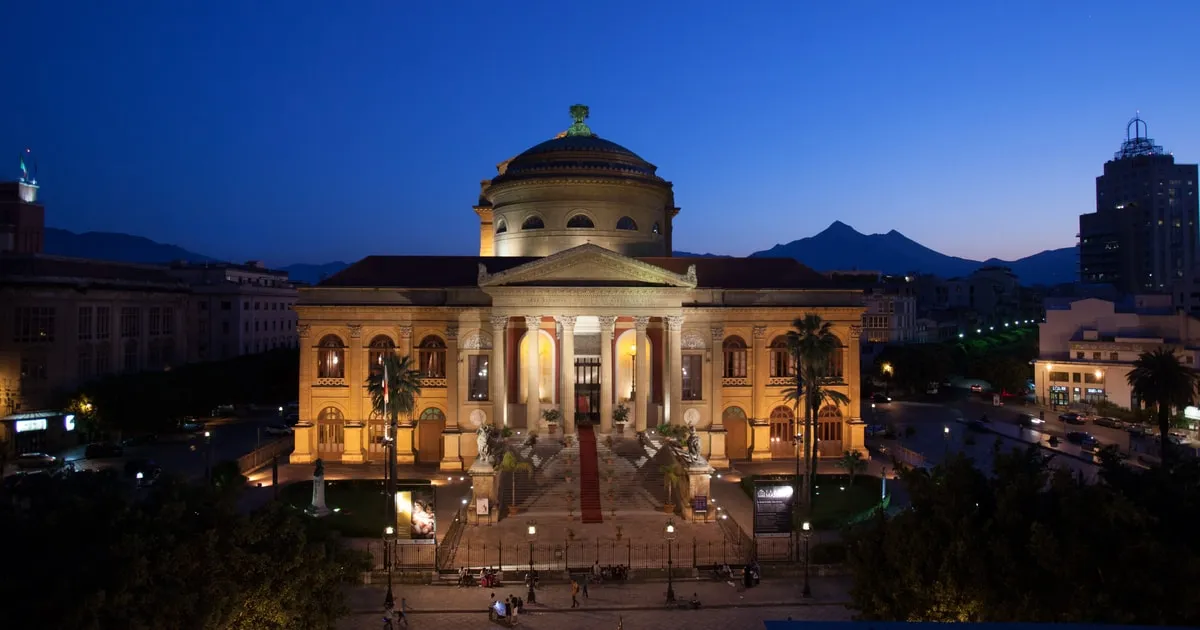 from $16
Most reviewed
Palermo: Teatro Massimo Opera House Guided Tour
A guided visit of the largest opera house in Italy: the auditorium, the royal box and the Pompeian room.
Check Availability from $34.16
Taormina
Italian Opera in Taormina
Opera arias and duets with live accompaniment in Taormina, sold on Viator.
Check Availability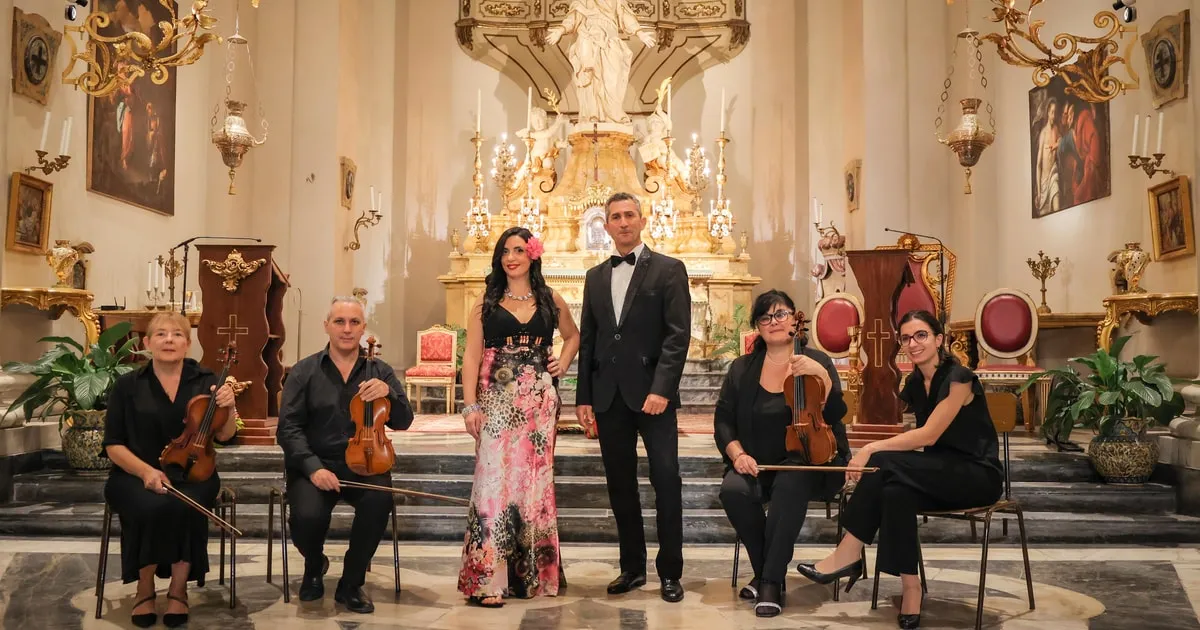 from $39
Bellini's city
Catania: Opera Concert - Tribute to Vincenzo Bellini
A tribute to Vincenzo Bellini: arias from Norma and La sonnambula in the Badia di Sant'Agata.
Check AvailabilityPrices, ratings and details are the platform's own. dollar figures are the listed prices — the platform bills in your account's currency.
What the Teatro Massimo is and why it matters
Palermo spent more than thirty years arguing about this building before a stone was laid, and the result is the biggest theatre in Italy.
The largest opera house in Italy
The Teatro Massimo Vittorio Emanuele stands on Piazza Verdi in Palermo and is dedicated to King Victor Emanuel II. At its inauguration it was the third largest opera house in Europe, after the Palais Garnier in Paris and the K. K. Hof-Opernhaus in Vienna, with an area of 7,730 square metres. It is renowned for its perfect acoustics.
The auditorium was planned for 3,000 people. In its current format it seats 1,381, with 7 tiers of boxes rising around an inclined stage in the classic horseshoe shape. For scale, compare it with La Scala, which seats around 2,000, or the Teatro di San Carlo, the oldest working opera house in Europe.
Twenty-two years of building
Palermo Council announced an international competition in 1864, at the instigation of the mayor Antonio Starrabba di Rudinì, to give the second biggest city in southern Italy a theatre worthy of it after unification. Giovan Battista Filippo Basile designed the house. Construction started on 12 January 1874, stopped for eight years from 1882, and resumed under his son Ernesto Basile after the elder Basile died in 1891.
The Rutelli and Machì company built the theatre from the foundations to the attic. Giovanni Rutelli designed a steam tower crane that could lift the large stone blocks and the Greek and Roman styled columns. On 16 May 1897, twenty-two years after the foundation stone, the theatre opened with Verdi's Falstaff conducted by Leopoldo Mugnone.
The Godfather steps and the long closure
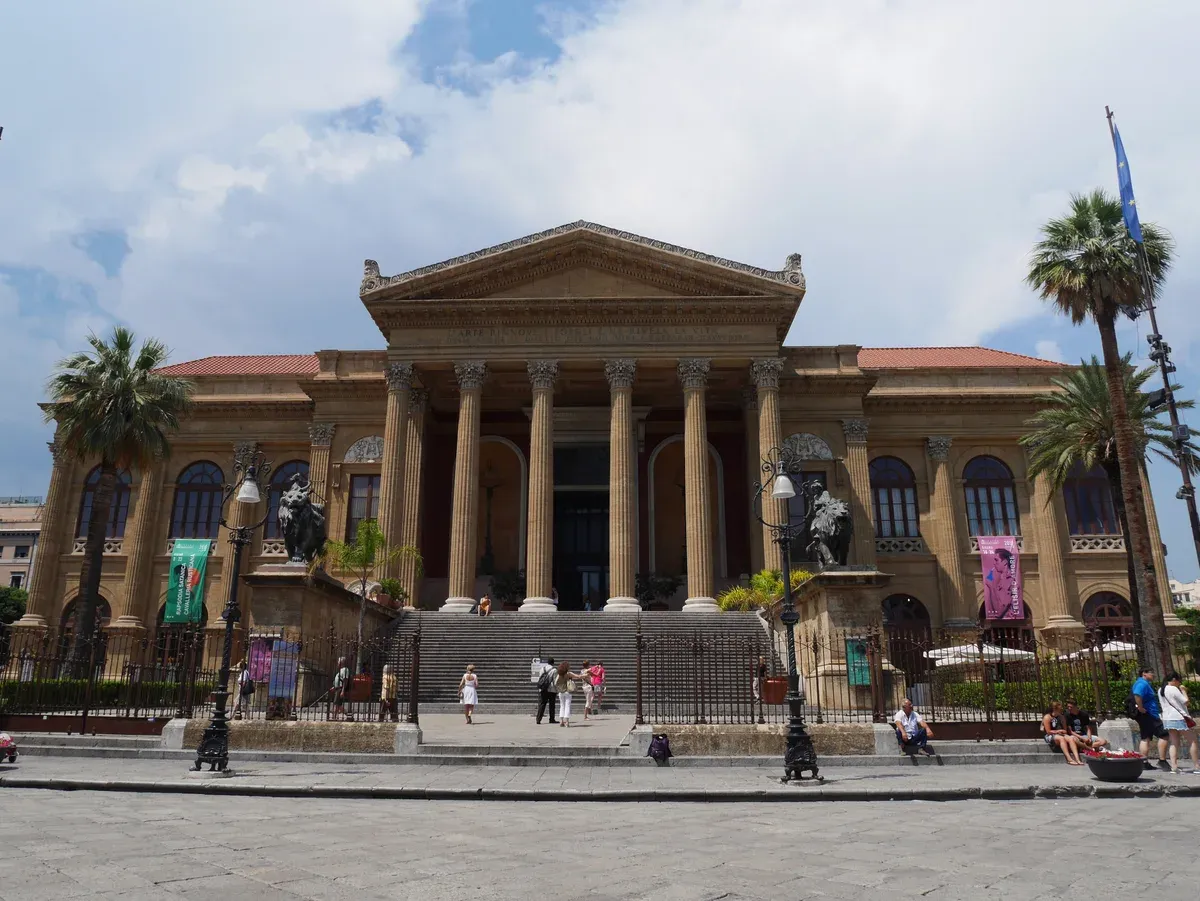
The broad exterior staircase, with its bronze lions and the groups Lyric Poetry by Mario Rutelli and Tragedy by Benedetto Civiletti, became one of cinema's most famous locations: the final scenes of The Godfather Part III were filmed here in 1990, with Coppola's uncle Anton Coppola conducting Cavalleria rusticana on screen. Fans of the film make the steps a fixed stop, and The White Lotus later used the house for a Madama Butterfly scene.
The theatre has a less glamorous modern chapter. It closed in 1974 for safety renovations and stayed shut for twenty-three years, a story of cost overruns, corruption and political infighting, before reopening on 12 May 1997, four days before its centenary. During the closure the city's opera seasons moved to the Teatro Politeama nearby. From 2020 the music director has been Omer Meir Wellber and the intendant is Francesco Giambrone.
What you see on the Teatro Massimo tour, in walking order
Every visit runs with a guide, in groups of up to 20, in Italian, English, French, Spanish or German. The route takes about 40 minutes.
Steps, foyer and the painted halls
You meet at the theatre on Piazza Verdi. Give yourself ten minutes before the start, our estimate, to climb the monumental staircase and look at the bronze groups by Rutelli and Civiletti, and to take the classic photo up the flight of steps. Late arrivals are absorbed into a later slot when there is one.
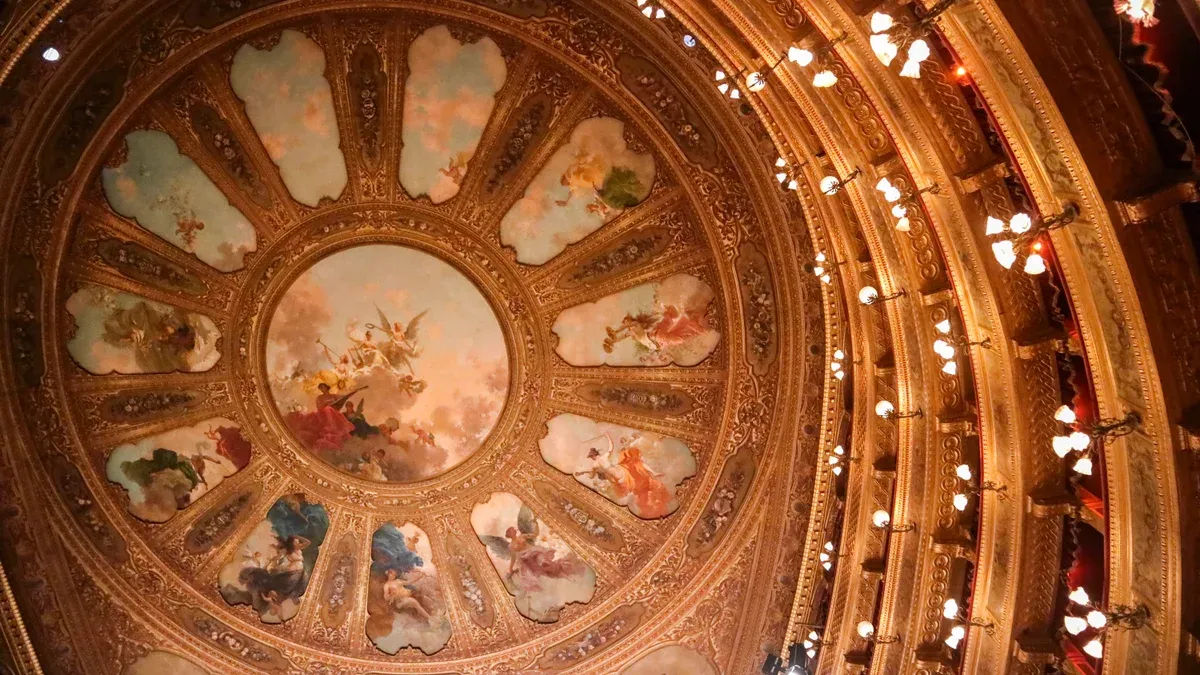
Inside, the route moves through the foyers and the side halls. The interior was painted and decorated by Rocco Lentini, Ettore De Maria Bergler, Michele Cortegiani and Luigi Di Giovanni, and the composer busts were carved by Giusto Liva and several of his sons. The tour's named stop in the halls is the Pompeian room, a richly painted salon in the Pompeian style.
The auditorium and the royal box
The centrepiece is the horseshoe auditorium with its seven tiers of boxes and a ceiling of gilded decoration. Guides point out the acoustics that made the house famous and explain how sightlines work from the top tiers, which matters if you plan to come back for a performance. The royal box, used by the Italian royal family on opening nights, is included on the standard route.
Two caveats. On rehearsal days the route can change, which may shorten the auditorium part, and the backstage add-on, sold at the theatre for $5.58 (€5), takes you behind the stage when operations allow. If seeing the stage machinery matters to you, ask at the box office about the add-on when you arrive.
Roof terrace option
The theatre sells a separate roof terrace tour at $22.30 (€20). It climbs above the auditorium for views over the dome and the Palermo rooftops. It is booked at the theatre and runs subject to the day's schedule, so confirm the time at the box office when you buy.
If you are choosing between the two, our pick is the standard tour first and the roof only on a clear day.
Hours, dress and when to go
The theatre runs tours daily, which makes planning simple, but a working opera house always keeps the right to change the route.
Opening hours and tour times
Guided tours run every day from 09:30 to 19:00, with the last tour at 18:20. Each tour lasts about 40 minutes. Tours go out in five languages: Italian, English, French, Spanish and German, so language is never a reason to skip the visit. Children under 6 join free.
The theatre is a working house with daily rehearsals, so on rehearsal days the route can change and part of the auditorium may be closed. That is the theatre's schedule and not a fault of the tour operator. If the full hall is essential to your visit, go early in the morning, our estimate for the best odds, and check the theatre's site the day before.
What to wear
The daytime tour has no dress rule beyond ordinary sightseeing decorum, and visitors in shorts and trainers take it daily. A performance at the Teatro Massimo is a different matter, and our general advice on the opera dress code in Italy applies: smart casual is the safe floor, and Palermo audiences dress up for premieres.
If you plan to photograph the steps, mid-morning light from Piazza Verdi is the most flattering, our estimate. The staircase faces the square, so late afternoon brings it into shadow.
Getting to the Teatro Massimo
The theatre sits at the northern edge of Palermo's old town, an easy walk from most central hotels.
On foot and by transport
The address is Piazza Verdi, 90138 Palermo. From the cathedral and the Quattro Canti crossroads it is a straight walk up Via Maqueda, about ten to fifteen minutes, our estimate. From Palermo's main railway station, allow twenty-five to thirty minutes on foot, our estimate, or take a local bus towards Piazza Verdi and get off at the theatre stop.
Taxis and ride apps drop at the edge of the square. If you are driving, park in the garages around the Ruggini Settangeli area and walk the last stretch, our estimate of five to ten minutes, since the square itself is largely closed to private traffic.
Pairing it with the rest of Palermo
The theatre anchors a natural half day: the Massimo tour in the morning, then a walk down Via Maqueda past the Quattro Canti to the cathedral and the markets. For a wider trip, see our notes on where to stay for opera and how Palermo compares as a base with the rest of opera in Italy.
Eastern Sicily makes a good second act. The Italian Opera in Taormina concert sits about two hours from Palermo by road, and the Bellini tribute concert in Catania pairs with the Teatro Massimo Bellini, Catania's own 1890 opera house named for the composer born there.
How much time to give it, and three ways to do it
The tour itself is fixed at about 40 minutes, but the time around it varies with how much of Palermo you fold into the same visit.
Three routings
The table below gives three practical ways to build a visit, from a quick stop to a full opera day. Walking times between stops are our estimate.
| Routing | Time needed | What you get |
|---|---|---|
| Quick stop: tour only | About 1 hour, our estimate | The 40-minute guided tour plus 15 to 20 minutes on the steps and in the foyer shop |
| Half day: tour plus old town | About 3 to 4 hours, our estimate | Morning tour, then walk down Via Maqueda to the Quattro Canti and the cathedral, about 15 minutes each leg, our estimate |
| Opera day plus evening concert | Full day plus evening | The theatre tour in the morning, travel east, then the Taormina opera arias concert in the evening |
Our pick
Take the first tour of the morning. The hall is least likely to be disturbed by rehearsals, the groups are smaller at that hour, our estimate, and you keep the whole afternoon for the old town. If you want to see a performance rather than the building, performance tickets are sold by the theatre itself through its own box office and website, and our page on opera tickets in Italy explains how Italian box offices work in general.
The Teatro Massimo in time
From competition to cinema set, the house took more than a century to reach its present shape.
-
1864
Competition announced
Palermo Council, urged on by mayor Antonio Starrabba di Rudinì, launches an international competition for a great new theatre.
-
1874
Construction starts
Work begins on 12 January under Giovan Battista Filippo Basile, with the Rutelli and Machì company building from the foundations up.
-
1882 to 1890
Eight-year halt
Building stops for eight years and resumes only after Basile's death in 1891, when his son Ernesto takes over.
-
1897
Opening night
On 16 May, twenty-two years after the foundation stone, the house opens as the third largest opera house in Europe with Verdi's Falstaff under Leopoldo Mugnone.
-
1974
Closed for renovations
Safety regulations force a closure meant to be temporary, but cost overruns, corruption and political infighting stretch it to twenty-three years, with opera moving to the Teatro Politeama.
-
1990
The Godfather Part III
Francis Ford Coppola films the finale on the steps and in the house, with his uncle Anton Coppola conducting Cavalleria rusticana on screen.
-
1997
Reopening
The theatre reopens on 12 May, four days before its centenary, and the opera season restarts in 1999.
-
2020
A new music director
Omer Meir Wellber takes over as music director, with Francesco Giambrone as intendant, succeeding Gabriele Ferro.
Sources: Wikipedia, Teatro Massimo history. The theatre's own guided tours pages.
Visiting the Teatro Massimo: dos and don'ts
A working opera house with film fame attached has a few rules worth knowing before you arrive.
Do
- Book the guided tour ahead and pick a morning slot, our estimate for the quietest halls.
- Arrive ten minutes early to climb the steps and photograph the bronze lions before your slot.
- Ask at the box office about the roof terrace tour at $22.30 (€20) and the backstage add-on at $5.58 (€5) if you want more than the standard route.
- Look up as you enter the auditorium: the ceiling and the seven tiers of boxes are the point of the house.
- Come back for a performance if you can, buying from the theatre's own box office.
- Pair the visit with the walk down Via Maqueda to the Quattro Canti and the cathedral.
Don't
- Don't arrive without a booking in high season, groups of 20 fill fast, our estimate.
- Don't expect the full backstage on the standard tour, that is the paid add-on.
- Don't plan around a fixed route on rehearsal days, the route can change.
- Don't confuse the theatre with a concert venue: the arias concerts in Taormina and Catania are separate evenings, not performances here.
- Don't skip the interior for the steps alone, the auditorium is the reason the house is famous.
- Don't bring large luggage, it will slow the security check, our estimate.
Five things most visitors do not know
A few facts that change how you look at the building once you are inside.
The list
- The auditorium was planned for 3,000 people but seats 1,381 today, spread over 7 tiers of boxes in a horseshoe shape (Wikipedia).
- The steam tower crane designed by Giovanni Rutelli lifted the huge stone blocks and the Greek and Roman styled columns during construction (Wikipedia).
- The bronze groups on the steps, Lyric Poetry and Tragedy with lions, are by Mario Rutelli and Benedetto Civiletti, both Palermo sculptors (Wikipedia).
- When the house reopened in 1997 after 23 years shut, Verdi's Aida had already been staged in 1998 while restoration work was still going on (Wikipedia).
- In the second season of The White Lotus, Quentin takes Tanya to a Madama Butterfly performance at the theatre (Wikipedia).
Map: the Teatro Massimo and nearby
The theatre sits at the top of the old town. The pins cover the walk down to the cathedral and the day trips east.
- 1 Teatro MassimoThe largest opera house in Italy, open daily for guided tours from 09:30 to 19:00.
- 2 Palermo CathedralThe city's great Norman-Arab cathedral, about fifteen minutes downhill from the theatre, our estimate.
- 3 Quattro CantiThe baroque crossroads of the old town, halfway between the theatre and the cathedral on Via Maqueda.
- 4 Teatro Massimo Bellini, CataniaCatania's opera house, opened in 1890 with Bellini's Norma, near the Bellini tribute concert.
- 5 Ancient theatre of TaorminaThe Greek-Roman theatre above the coast, about two hours from Palermo by road and close to the Taormina opera arias concert.
Numbers match the pins on the map.
Near the Teatro Massimo
Three easy pairings for the same day or the same trip.
Quattro Canti and the old town
The baroque crossroads where the four old quarters meet, halfway down Via Maqueda between the theatre and the cathedral. Plan the theatre tour in the morning and the old town after lunch.
10 to 15 min walk (our estimate) Read the guideTeatro Massimo Bellini, Catania
Catania's 1890 opera house, inaugurated with Bellini's Norma, where Maria Callas later sang. Evening options near it include the Bellini tribute concert.
About 2.5 hours by road (our estimate) Read the guideTaormina
The hilltop town with the ancient Greek-Roman theatre. In the evening the Italian Opera in Taormina concert offers an hour of arias and duets with live accompaniment.
About 2 hours by road (our estimate) Read the guideTeatro Massimo: questions visitors ask
What is the Teatro Massimo famous for?
It is the largest opera house in Italy and was the third largest in Europe at its 1897 opening, renowned for its acoustics. It is also famous as the setting of the final scenes of The Godfather Part III, filmed on its steps and in the auditorium.
Is the Teatro Massimo worth visiting?
Yes if you care about opera houses at all. The 40-minute guided tour covers an auditorium of seven tiers of boxes, the royal box and the painted Pompeian room, and the monumental staircase outside is free to climb. At $16 it is one of the better-value theatre visits in Italy.
How much does it cost to visit the Teatro Massimo?
The roof terrace tour is $22.30 (€20) and the backstage add-on $5.58 (€5). Children under 6 are free.
Is there a dress code at the Teatro Massimo?
No dress rule applies to the daytime guided tour, normal sightseeing clothes are fine. For an evening performance, Palermo audiences dress up, so follow our general advice on the opera dress code in Italy: smart casual as a minimum.
Who owns the Teatro Massimo?
The house is run by the Fondazione Teatro Massimo, the foundation behind teatromassimo.it, with Francesco Giambrone as intendant and Omer Meir Wellber as music director since 2020. The theatre and its guided tours are operated by the foundation itself.
What operas are on in Palermo?
The programme for coming seasons is published and sold by the theatre itself through its box office and website, so check there for current casts and dates. For a broader view of the Italian calendar, from autumn seasons to summer festivals, see our guide to opera festivals in Italy.
How long does the Teatro Massimo tour take?
About 40 minutes, in groups of up to 20, with guides in Italian, English, French, Spanish and German. Allow an hour including the steps and photos, our estimate. On rehearsal days the route can change.
Can I see opera in Sicily outside Palermo?
Yes. Two evening concerts are bookable: the Italian Opera in Taormina concert, an hour of arias in Taormina, and the Bellini tribute in Catania, arias from Norma and La sonnambula in the Badia di Sant'Agata. Both are concerts, not staged operas at the theatre.
Teatro Massimo on film
Three short films that show Teatro Massimo and the way in, worth a look before you pick a tour.
A tour of the interior of the Teatro Massimo
Filmed by Sicily Pulse TV: Teatro Massimo as you will see it on the day.
Video: Sicily Pulse TVPALERMO - TEATRO MASSIMO - SICILIA
Filmed by travel dreams with leo: Teatro Massimo as you will see it on the day.
Video: travel dreams with leoTeatro Massimo Vittorio Emanuele is an opera house. AMAZING! - Palermo Italy - ECTV
Filmed by Eric Clark's Travel Videos: Teatro Massimo as you will see it on the day.
Video: Eric Clark's Travel VideosPrices, hours and terms are set by the venue or operator and confirmed at checkout.
We may earn a commission if you book through one of our links, at no extra cost to you. Full affiliate disclosure