 Opera Houses in Italy
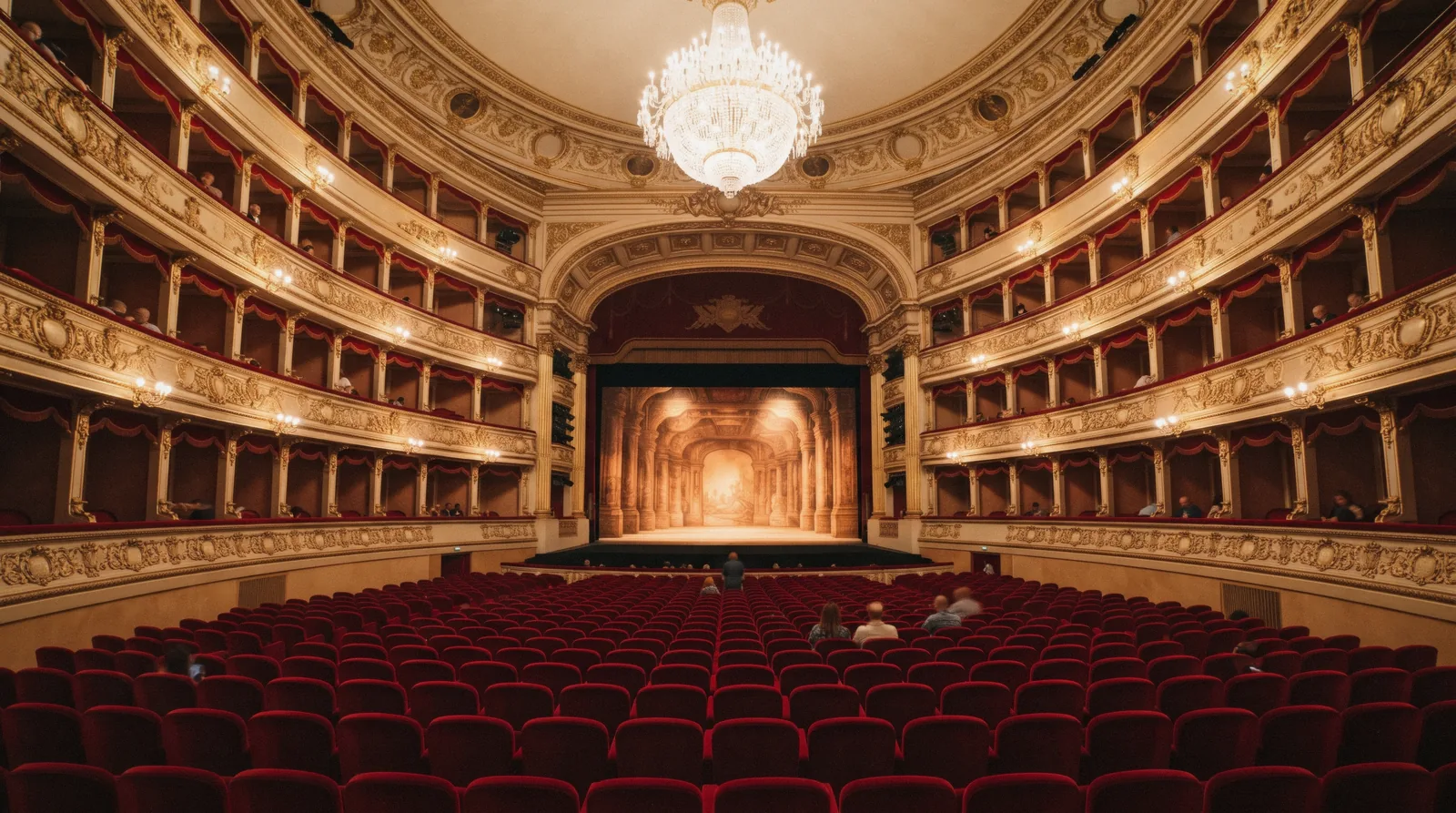
The teatro dell opera di roma is Rome's main opera house, opened in 1880 as the Teatro Costanzi and rebuilt twice since. Puccini's Tosca and Mascagni's Cavalleria rusticana both premiered here. This guide covers the guided tours, what a visit costs, where to sit, what to wear and how to fill an opera-free evening in Rome. For the full list, see our guide to the opera houses in Italy.
Quick answer Rome opera house in one minute
The Teatro dell'Opera di Roma on Piazza Beniamino Gigli is Rome's opera house, seating about 1,560. The theatre sells guided tours of the foyer, stalls, Royal Box, gallery and museum for about an hour, and performance tickets through its own box office and TicketOne. In summer the company moves outdoors, playing the Baths of Caracalla since 1937 and the Circus Maximus for 2026 while the Baths are restored.
Key takeaways
- Compare the two bookable evenings near the theatre: La traviata at St Paul's Within the Walls and the church opera arias ticket.
- Planning a wider trip? Start with opera in Rome and opera houses in Italy.
- Check the opera dress code in Italy before you go.
Key facts
Opening hours
| Guided tours | About one hour, Italian and English, book on the theatre site |
|---|
Closed Summer season moves outdoors (Baths of Caracalla, Circus Maximus in 2026)
Planning it
- Time needed
- Our estimate: one hour for a guided tour, a full evening for a performance
- Book ahead
- Optional — walk-up usually fine
- Address
- Piazza Beniamino Gigli 7, 00184 Rome
Which opera night should you book
Two bookable evenings run a short walk from the Teatro dell'Opera di Roma, on Via Nazionale. Both are church concerts staged by companies independent of the opera house, so you get live opera in Rome even when the Costanzi is dark or sold out.
Do you want a full staged opera or a shorter evening of arias?
| Option | Price | Length | Includes | Book |
|---|---|---|---|---|
| Rome: La Traviata at St. Paul's Within the WallsAnyone who wants a complete opera, in costume, without paying season prices | $45 | 2 hours 10 minutes | Opera ticket for the full staged La traviata with costumes and a chamber orchestra | Check Availability |
| Rome: St. Paul's Within the Walls Church Opera Arias TicketFirst-timers and anyone with one free evening who wants a taste, not a whole opera | $28 | 1.5 hours | Concert ticket for an evening of opera arias | Check Availability |
Both meet at St Paul's Within the Walls, Via Nazionale at Via Napoli, about five minutes on foot from the theatre. Figures current in Q4 2026.
Bookable opera evenings near the theatre
These two listings run in the church of St Paul's Within the Walls on Via Nazionale, five minutes from the Costanzi. They are church concerts, not performances of the Rome opera company.
 from $45
Full opera
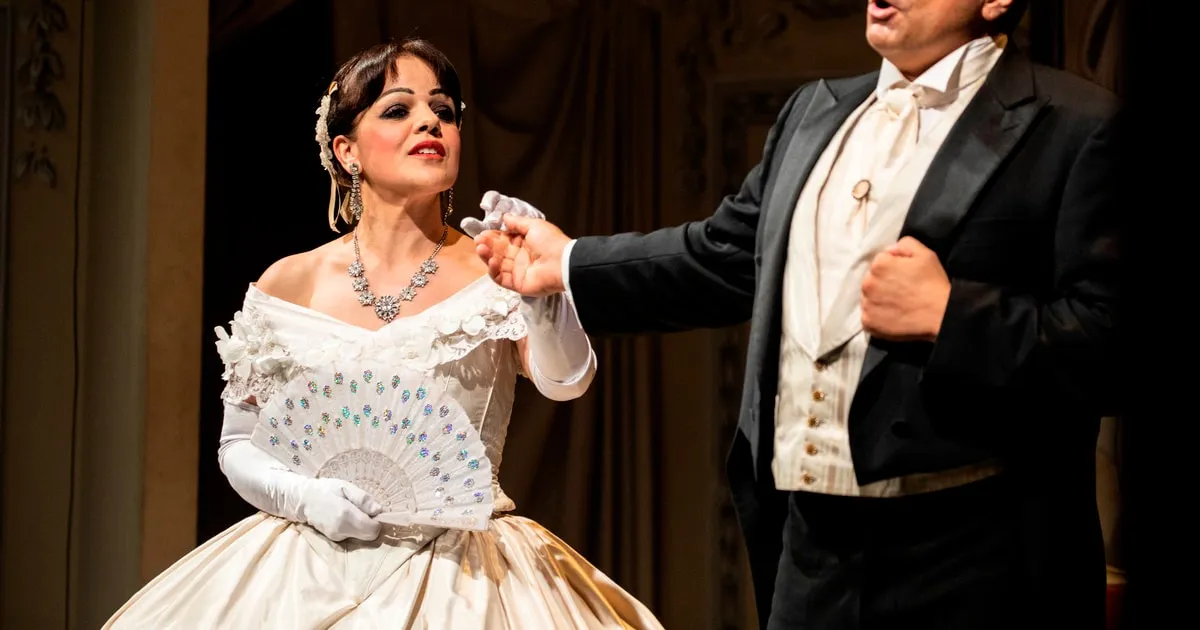
Rome: La Traviata at St. Paul's Within the Walls
Verdi's La traviata performed in full, in costume, in St Paul's Within the Walls on Via Nazionale.
Check Availability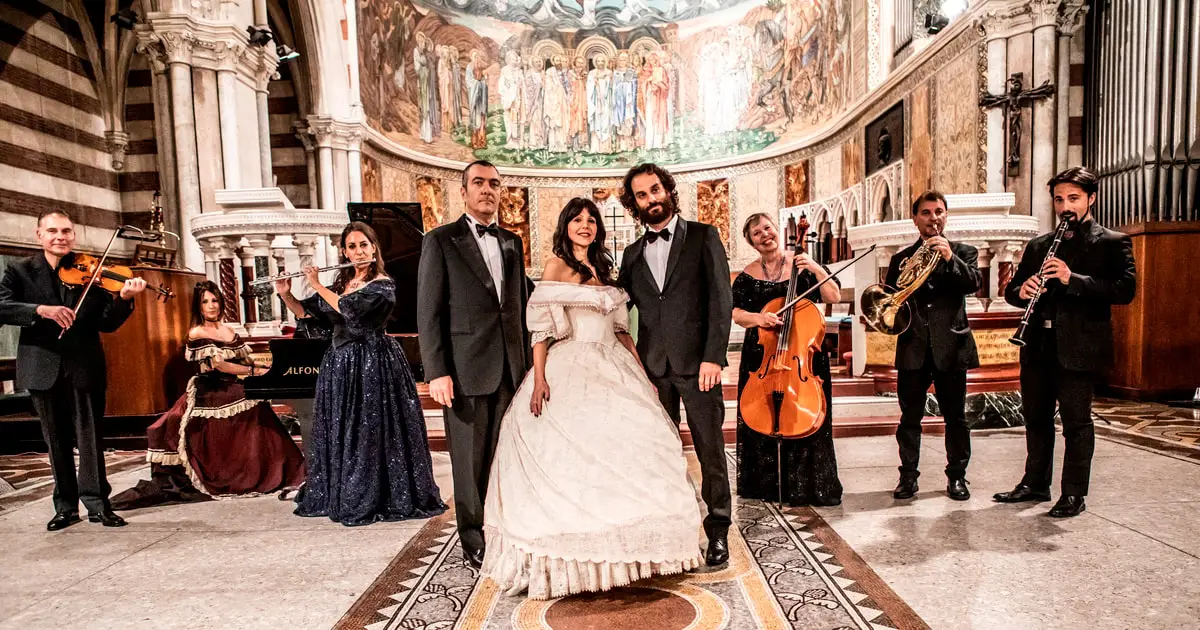 from $28
Near the opera house
Rome: St. Paul's Within the Walls Church Opera Arias Ticket
An evening of opera arias in St Paul's Within the Walls, the church on Via Nazionale.
Check AvailabilityPrices, ratings and details are the platform's own. dollar figures are the listed prices — the platform bills in your account's currency.
What the Teatro dell'Opera di Roma is, and why it matters
Rome's opera house is one of the great working theatres of Italy, with two world premieres of Verdi-era opera to its name and an acoustic that survives every rebuilding.
From Costanzi's gamble to the city's opera house
Domenico Costanzi financed the theatre himself and the Milanese architect Achille Sfondrini built it in eighteen months. It opened in November 1880 as the Teatro Costanzi with Rossini's Semiramide, seating 2,212 in a horseshoe of three tiers of boxes, an amphitheatre and two galleries under a frescoed dome. Sfondrini designed the interior as a resonance chamber, and that horseshoe is why the hall still sounds the way it does.
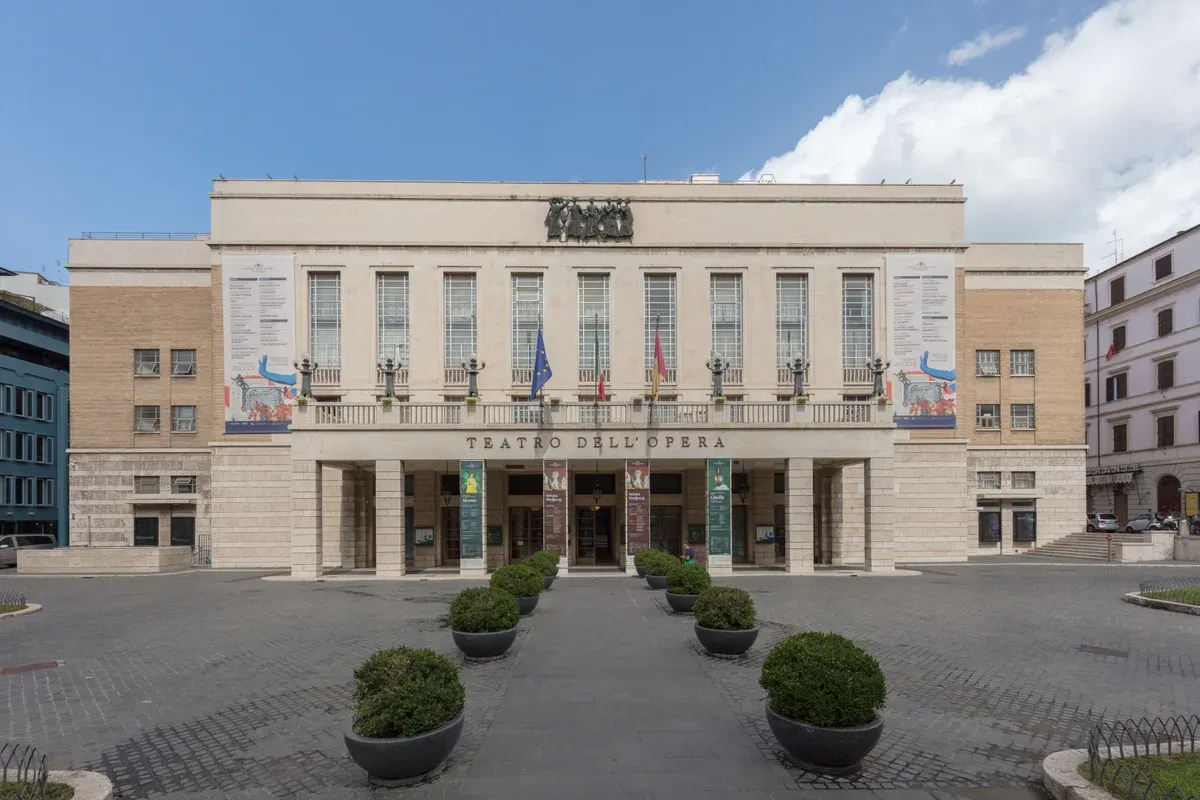
The house gave the world Cavalleria rusticana in 1890 and Tosca in 1900, both in the Costanzi years. Rome bought the building in 1926, renamed it Teatro Reale dell'Opera and Marcello Piacentini rebuilt it, moving the entrance to the new Piazza Beniamino Gigli side and swapping the amphitheatre for a fourth tier of boxes. After the monarchy fell the name shortened to Teatro dell'Opera, and Piacentini remodelled the facade, entrance and foyer again in 1958 into the form you see today.
What the hall is like now
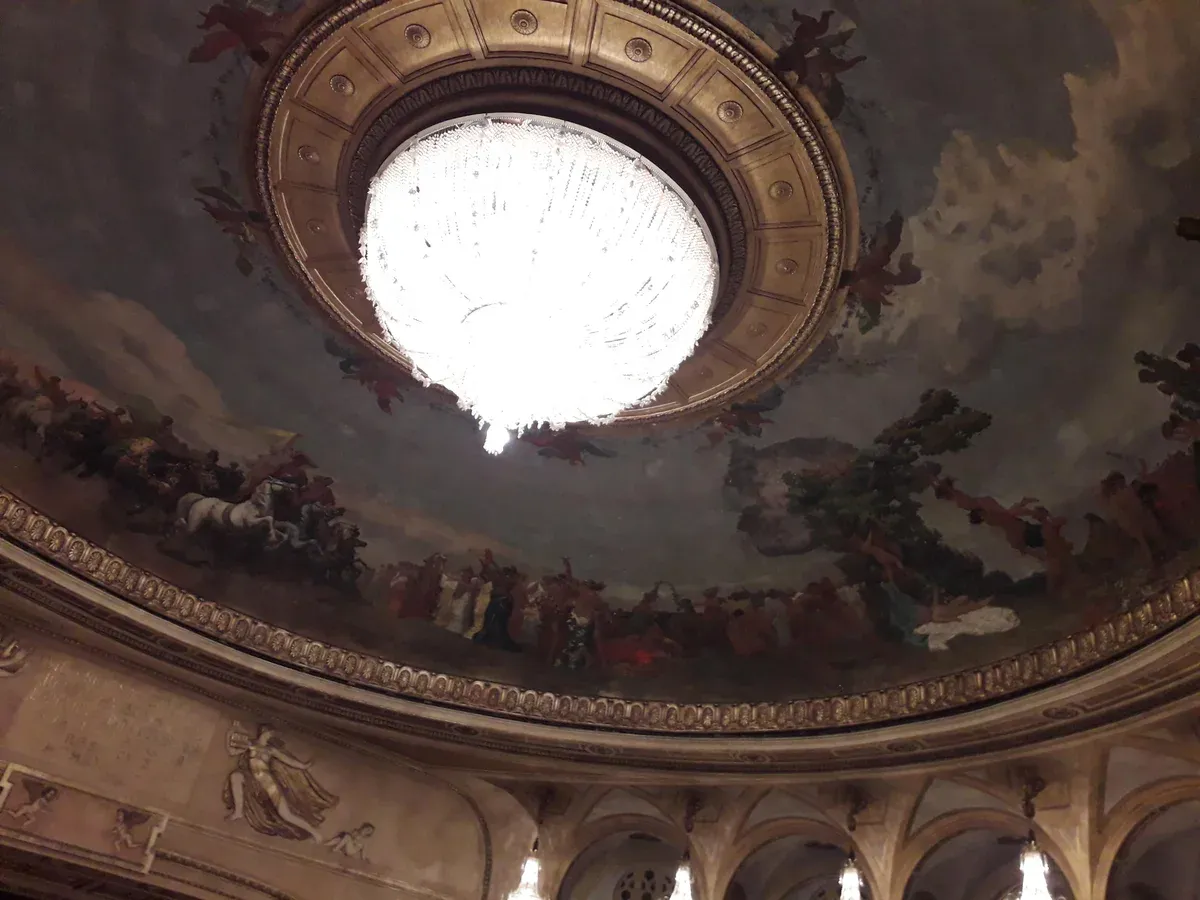
The present auditorium seats about 1,560, and the name Teatro Costanzi remains officially in use for the main hall. The chandelier over the stalls, added in the 1928 rebuilding, measures six meters across and carries 27,000 crystal drops. Above the proscenium a Latin plaque records the Fascist-era restoration, with its dates oddly reversed. The acoustics still rank with any auditorium in the world, which is the single best reason to hear something here rather than only look.
If you want to compare houses, La Scala in Milan and the Teatro di San Carlo in Naples are the other two essential stops, and the open-air Arena di Verona covers the summer months.
| Fact | Detail |
|---|---|
| Seats | About 1,560 today, 2,212 as built |
| Opened | November 1880 as the Teatro Costanzi |
| World premieres | Cavalleria rusticana (1890), Tosca (1900) |
| Address | Piazza Beniamino Gigli 7, Rome |
What you see on a visit, in walking order
A guided tour covers five spaces in about an hour, moving from the public rooms up to the top of the house.
The tour route
Tours in Italian and English take in the foyer, the stalls, the Royal Box, the gallery and the museum. Entry is at the Piazza Beniamino Gigli side, the entrance Piacentini created in the 1928 rebuilding. Start in the foyer, remodelled in 1958, then take a stalls seat to look up at the six-meter chandelier of 27,000 crystal drops.
From the stalls you climb to the Royal Box, then to the gallery at the top of the horseshoe, where you can read the acoustic shape Sfondrini drew in 1880. The museum closes the route with the theatre's history, including the 1900 Tosca premiere. The full tour runs about one hour and costs $16.73 (€15) at the standard rate, $8.92 (€8) for under 14s, or $18.95 (€17) booked in advance. Tickets are sold at the box office on Piazza Beniamino Gigli or through TicketOne.
If you come for a performance instead
On a performance night the route is simpler: doors, cloakroom, your seat. The cheapest seats are usually the two galleries high in the horseshoe, and the sound up there is the point of Sfondrini's design. Performance tickets are sold by the theatre itself through operaroma.it and TicketOne, so buy those direct.
For more on how Italian houses sell seats, see our guide to opera tickets in Italy.
| Stop | What it is |
|---|---|
| Foyer | The 1958 Piacentini entrance space, your meeting point |
| Stalls | Ground-floor seating under the 27,000-drop chandelier |
| Royal Box | The ceremonial box over the stalls |
| Gallery | Top of the horseshoe, the acoustic sweet spot |
| Museum | The theatre's history from the 1880 opening |
Hours, dress code and quiet times
The theatre keeps no fixed public opening hours, so plan around the tour calendar or a performance.
When you can go in
Guided tours of about one hour run in Italian and English, but the theatre publishes no fixed daily hours for visits in its listings, so check the tour calendar on operaroma.it or ask at the box office on Piazza Beniamino Gigli before you set out. Performance evenings follow the season schedule published on the theatre's site. Italian houses run their indoor seasons roughly from autumn into spring or early summer, and the Rome company then decamps outdoors for the summer, which changes what you can see inside.
Our estimate: tour slots early on a weekday are the quietest, and the piazza is busiest in the hour before an evening curtain.
What to wear
The Rome house publishes no dress code in its listed material, so apply the standard Italian rule: smart casual is safe everywhere, and shorts and sleeveless tops feel out of place at an evening opera. For the detail across the country, read our opera dress code guide. La Scala, by contrast, refuses shorts and sleeveless T-shirts at the door, and La Fenice in Venice asks for black tie on opening night, so Rome is the relaxed end of the scale.
Silence during the music is the one hard rule. Italian galleries are vocal audiences, they clap and sometimes boo, but talking over the singing is not tolerated anywhere.
| Occasion | What to wear |
|---|---|
| Guided tour | Smart casual, comfortable shoes for the stairs |
| Evening opera | Jacket or dress, no shorts or sleeveless tops |
| Gallery seats | Relaxed smart casual is accepted |
Getting to the theatre
The house sits on Piazza Beniamino Gigli 7, a short walk from Termini station and the Repubblica metro stop.
By metro, train and on foot
The theatre is a short walk from Termini station, Rome's main rail hub, and from the Repubblica metro stop on line A. If you arrive by high-speed train at Termini, head southwest on Via Nazionale and you reach the piazza in a few minutes on foot, passing St Paul's Within the Walls on the way. From Repubblica, walk down Via Nazionale or cut through Piazza della Repubblica toward the theatre.
The position makes the house one of the easiest opera venues in Italy to reach. Unlike La Fenice in Venice, buried in the lanes off San Marco, or the Teatro Massimo on its vast Palermo piazza, the Rome house sits in the middle of the transport grid. If you are choosing where to base yourself, see our guide on where to stay for opera.
| Routing | How | Our estimate of time |
|---|---|---|
| Termini station | On foot, southwest toward Piazza Beniamino Gigli | about 10 minutes |
| Repubblica metro (line A) | On foot down Via Nazionale | about 5 minutes |
| Piazza Venezia | Bus or metro to Repubblica, then walk | about 20 minutes total |
How much time to give it, and what to pair it with
Give the theatre an hour on a tour or a whole evening for a performance, and pair it with the music district around Via Nazionale.
Building an evening around the Costanzi
Our estimate: a guided tour fills about an hour, a performance from curtain to final bows fills an evening with an interval. The smart pairing is a tour in the late afternoon, dinner on Via Nazionale, and then music. If the opera house is dark, the two church evenings a few minutes away fill the gap: the full staged La traviata runs two hours ten minutes, or the arias concert runs ninety minutes.
St Paul's Within the Walls is an American Episcopal church on Via Nazionale, and the concerts there are staged by independent companies with costumes and a chamber orchestra, not productions of the Rome opera company. For other church and palace concerts across the city, see our hub on opera in Rome and the wider list of opera tours in Italy.
A summer twist: Caracalla and the Circus Maximus
The opera company has played the Baths of Caracalla, the ruined Roman bath complex across the city, every summer since 1937, with the ancient walls as a backdrop. In 2026 the summer festival moved to the Circus Maximus, the ancient chariot-racing circus, from late June to late July, while the Baths are restored. So in summer, do not expect to find the company at Piazza Beniamino Gigli at all.
That makes the plan simple. Autumn to early summer: the Costanzi indoors. Summer: opera festivals in Italy move outdoors, from Caracalla to the Arena di Verona and the Puccini festival at Torre del Lago.
| Month | Where the company plays |
|---|---|
| Autumn to early summer | Teatro Costanzi, Piazza Beniamino Gigli |
| Late June to late July | Circus Maximus, while the Baths of Caracalla are restored |
| From 1937 onward, summer tradition | Terme di Caracalla, the usual outdoor home |
How the Rome opera house got here
Eight dates explain the building, from a contractor's gamble to a 21st-century outdoor festival.
-
November 1880
The Teatro Costanzi opens
Domenico Costanzi's privately financed house, built in eighteen months by Achille Sfondrini, opens with Rossini's Semiramide, seating 2,212.
-
1890
Cavalleria rusticana premieres
Pietro Mascagni's one-act verismo opera has its world premiere in the Costanzi and changes Italian opera.
-
1900
Tosca premieres
Giacomo Puccini's Tosca, set in Rome itself, is first performed here in January, organized by Costanzi's son Enrico.
-
1937
Summer opera moves to the Baths of Caracalla
The company begins staging summer performances against the Roman ruins of Terme di Caracalla, a tradition it keeps to this day.
-
1926 to 1928
Rome buys the house
The city council buys the theatre, renames it Teatro Reale dell'Opera, and Marcello Piacentini rebuilds it, reopening with Boito's Nerone and adding the six-meter, 27,000-drop chandelier.
-
1958
The Piacentini remodeling
A second Piacentini campaign reshapes the facade, entrance and foyer into the form seen today, cutting capacity to about 1,560.
-
1964 to 1965
Giulini and Visconti
Mozart's Le nozze di Figaro and Verdi's Don Carlo are staged by Luchino Visconti and conducted by Carlo Maria Giulini, productions that defined post-war opera.
-
2026
The summer festival moves to the Circus Maximus
While the Baths of Caracalla are restored, the summer season runs at the Circus Maximus from late June to late July.
Sources: the theatre's history as recorded by Wikipedia and the official operaroma.it tour and festival listings.
Do and do not at the Rome opera house
Do
- Book guided tours ahead, at $18.95 (€17) booked, or take your chances at the box office on Piazza Beniamino Gigli for $16.73 (€15)
- Buy performance tickets direct from the theatre through operaroma.it or TicketOne
- Arrive at least 30 minutes before curtain to collect tickets and find your gallery seat
- Dress smart casual for an evening, jackets and dresses rather than shorts and sleeveless tops
- Check whether the company is at the Costanzi, Caracalla or the Circus Maximus before you book
- Pair the theatre with a church concert on Via Nazionale on a second evening
Don't
- Do not confuse the church concerts at St Paul's Within the Walls with productions of the Rome opera company, they are staged by independent ensembles
- Do not expect the theatre to be open for walk-in visits, it publishes no fixed visiting hours and tours follow the calendar
- Do not talk or film during the performance, the Italian gallery audience claps loudly but keeps silent in the music
- Do not plan an indoor visit in midsummer, the company is outdoors from late June
- Do not skip the museum on the tour route, the 1900 Tosca material is the best of it
- Do not arrive by car, Termini and the Repubblica metro are both a short walk away
Five things most visitors do not know
The house hides more history than its modest facade suggests.
The list
Five facts worth quoting over dinner before the curtain.
- The theatre stands on the site where the house of the emperor Heliogabalus stood in ancient times, and was built in just eighteen months Wikipedia, Teatro dell'Opera di Roma.
- The hall was conceived as a resonance chamber, Sfondrini's name for the horseshoe acoustic that still carries a singer's voice to the top gallery Wikipedia, Teatro dell'Opera di Roma.
- The chandelier added in 1928 measures six meters across and is made of 27,000 crystal drops Wikipedia, Teatro dell'Opera di Roma.
- In 1958 Maria Callas abandoned a Norma after the first act in front of the President of Italy, and no understudy had been engaged Wikipedia, Teatro dell'Opera di Roma.
- The Latin plaque above the proscenium commemorating the 1928 restoration shows its dates in a confusing, apparently reversed order, because the Roman numeral VI counts years from the Fascist March on Rome Wikipedia, Teatro dell'Opera di Roma.
Map: the theatre and the music district around it
The Costanzi sits in a tight cluster of concert venues and transport links between Termini and the centre.
- 1 Teatro dell'Opera di RomaRome's opera house, opened 1880 as the Teatro Costanzi, guided tours and the indoor season.
- 2 St. Paul's Within the WallsEpiscopal church on Via Nazionale staging nightly opera concerts and a full staged La traviata.
- 3 Roma TerminiRome's main railway station, the easiest arrival point for an evening at the opera.
- 4 Baths of CaracallaThe Roman bath ruins that host the opera company's open-air summer season since 1937, now under restoration.
- 5 Circus MaximusThe ancient chariot circus that hosts the 2026 Caracalla summer festival while the Baths are restored.
- 6 Palazzo della CancelleriaRenaissance palace off Campo de' Fiori with nightly opera arias and duets by a chamber ensemble.
Numbers match the pins on the map.
What to pair with your opera night
Three destinations that combine naturally with the theatre.
St Paul's Within the Walls
This church on Via Nazionale hosts nightly opera concerts, including La traviata staged in full. It is the obvious plan B when the Costanzi is dark.
5 min walk (our estimate) Read the guideBaths of Caracalla
The Roman baths have hosted the company's summer opera since 1937. They are being restored, so the 2026 season runs at the Circus Maximus instead.
Across the city centre (our estimate) Read the guidePalazzo della Cancelleria
A Renaissance palace off Campo de' Fiori with an hour of arias and duets by Opera Lirica di Roma. Read more in our opera in Rome guide.
About 25 min walk (our estimate) Read the guideTeatro dell'Opera di Roma: your questions
How much do tickets for the Teatro dell'Opera di Roma cost?
Guided tours of the theatre cost $16.73 (€15) full price, $8.92 (€8) for under 14s, or $18.95 (€17) when booked ahead. Performance ticket prices are set by the theatre and vary by production and seat, sold through operaroma.it and TicketOne. If you want a fixed price, the arias evening near the theatre lists at $28.
How should I dress for the Rome opera house?
The house publishes no official dress code, so use Italian convention. Smart casual works for everything, and for an evening performance a jacket or dress fits the room better than shorts and a sleeveless top. Full guidance is in our opera dress code guide.
Can I visit the theatre without attending a performance?
Yes. Guided tours of about one hour run in Italian and English, covering the foyer, stalls, Royal Box, gallery and museum. The theatre lists no fixed daily visiting hours, so check the tour calendar on operaroma.it or ask at the box office on Piazza Beniamino Gigli.
Where does the Rome opera perform in summer?
The company has played the Baths of Caracalla every summer since 1937, using the Roman ruins as a backdrop. In 2026 the summer festival moved to the Circus Maximus from late June to late July while the Baths are restored. See our opera festivals guide for summer options across Italy.
What is the Teatro Costanzi?
It is the original name of the theatre, after Domenico Costanzi who built and financed it in 1880. The name remains officially in use for the main auditorium today, so you will see both on tickets and signage.
What operas premiered here?
Two landmarks of Italian opera had their world premieres in the Costanzi: Mascagni's Cavalleria rusticana in 1890 and Puccini's Tosca in 1900. The Rome setting is one reason Tosca feels at home here. Compare the premiere houses in our guide to opera houses in Italy.
How do I get to the theatre from Termini?
Walk. The theatre on Piazza Beniamino Gigli is a short walk southwest of Termini station, our estimate about ten minutes, and the Repubblica metro stop on line A is closer still. Via Nazionale leads you almost to the door, past St Paul's Within the Walls.
Are the church concerts on Via Nazionale real operas?
Some are. The St Paul's La traviata is the full opera performed in costume with a chamber orchestra over two hours and ten minutes. The arias ticket is a ninety-minute concert of highlights. Neither is a production of the Rome opera company, they are staged by independent ensembles.
Rome Opera House on film
Three short films that show Rome Opera House and the way in, worth a look before you pick a tour.
Teatro dell'Opera (Rome Opera House) Full Walking Tour
Filmed by Rome For You: Rome Opera House as you will see it on the day.
Video: Rome For YouTeatro dell'Opera di Roma
Filmed by Opera di Roma: Rome Opera House as you will see it on the day.
Video: Opera di RomaTeatro dell'opera - Roma
Filmed by sandro montesacro: Rome Opera House as you will see it on the day.
Video: sandro montesacroPrices, hours and terms are set by the venue or operator and confirmed at checkout.
We may earn a commission if you book through one of our links, at no extra cost to you. Full affiliate disclosure