 Opera Houses in Italy
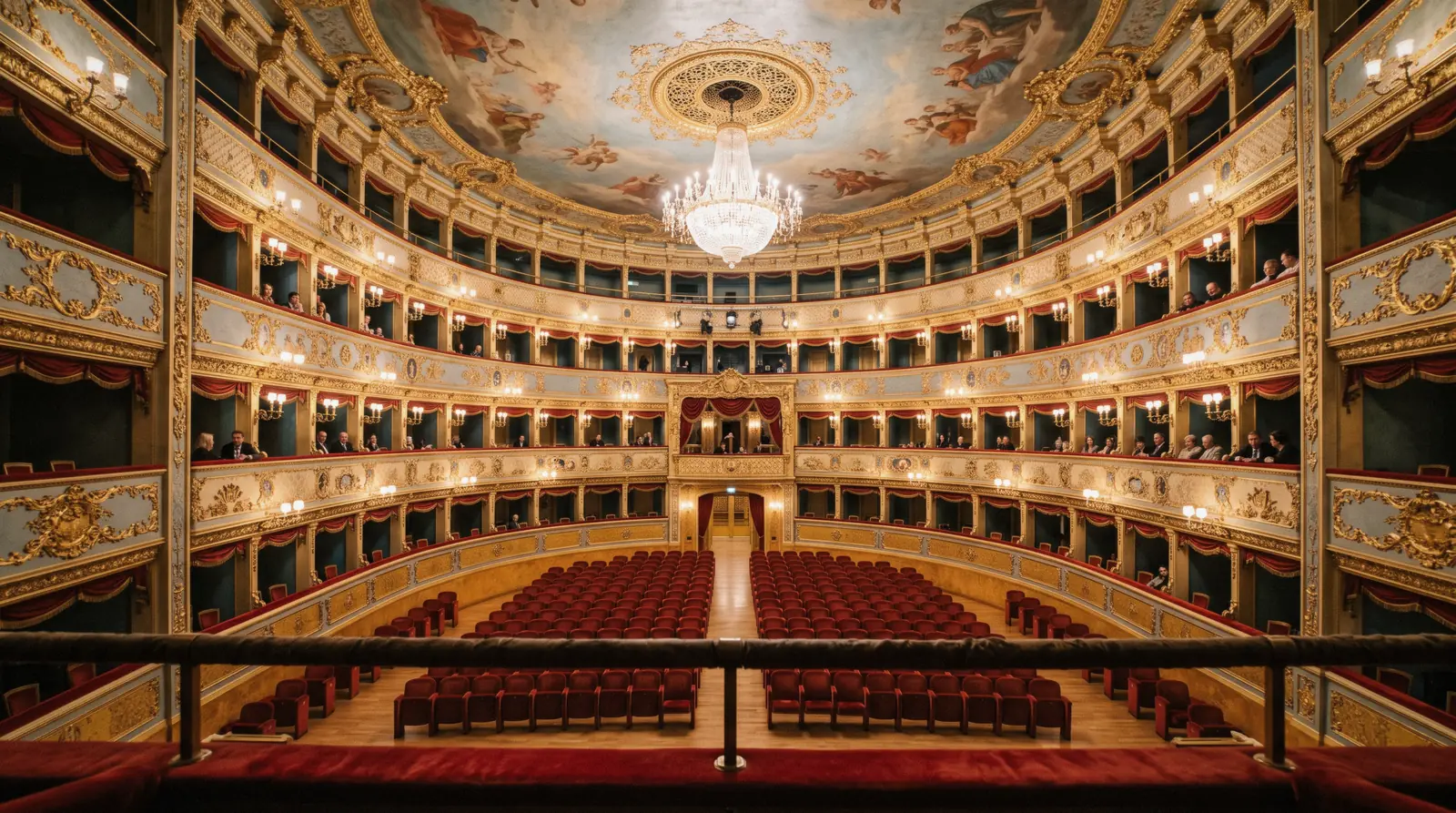
Teatro La Fenice is Venice's opera house, burnt down three times and rebuilt each time, most recently after the arson of 1996. A daytime visit costs $13 with an audio guide and takes about an hour, and it is one of the easiest of all the opera houses in Italy to fit into a city break. This guide compares every bookable visit and tells you what to expect inside.
Quick answer Visiting La Fenice at a glance
La Fenice is Venice's opera house, opened in 1792, destroyed by fire three times and rebuilt each time, so the name means The Phoenix. It is worth visiting: the gilded horseshoe hall, the royal box and the Maria Callas room are open daily from 09:30 to 18:00. The entry ticket with audio guide costs $13 and takes about an hour.
Key takeaways
- Book the La Fenice entry ticket with audio guide for a self-guided visit of the hall
- Prefer a human guide? Pick the guided La Fenice tour through the foyers and auditorium
- Planning an evening too? See opera in Venice for palace performances and concerts
Key facts
Opening hours
| Theatre visits, every day | 09:30–18:00 |
|---|---|
| Box office, every day | 10:00–17:00 |
Closed Visits change at short notice for rehearsals
Planning it
- Time needed
- Our estimate: about 1 hour for the visit, longer if you add a palace concert the same evening
- Book ahead
- Optional — walk-up usually fine
- Address
- Campo San Fantin 1965, San Marco, 30124 Venice
La Fenice tickets and tours compared
Four bookable options cover La Fenice and opera evenings nearby: three theatre visits and one full sung opera in a Grand Canal palace. Prices and lengths are as listed by the operators, with entry included in every theatre visit.
Do you want to look at the theatre by day, or hear an opera sung at night?
| Option | Price | Length | Includes | Book |
|---|---|---|---|---|
| La Fenice entry ticket with audio guideThe straightforward pick for most visitors: cheapest, best rated, your own pace | $13 | About 1 hour | Theatre entry, audio guide, the Maria Callas room | Check Availability |
| The Majestic Teatro La Fenice: guided tourTravellers who want the story of the two fires told by a person, not a recording | $28 | 1 hour | Guided visit of the foyers, auditorium and royal box | Check Availability |
| Teatro La Fenice tour in VeniceViator users who want a self-paced visit with free cancellation up to 24 hours before | $28.47 | 1 hour | Theatre entry and audio guide, self-paced | Check Availability |
| Traveling Opera in a historic palace on the Grand CanalAnyone who wants to hear a full opera in Venice rather than only see the hall | $106 | 2 hours | A full opera act by act in Palazzo Barbarigo Minotto, a drink at the first interval | Check Availability |
All four are day-visit or evening options you can book ahead. The opera itself in the theatre is sold by the theatre's own box office. Figures current in Q4 2026.
Every La Fenice tour and ticket in one list
All the theatre visits and palace opera evenings bookable through this guide. Our pick for a first visit is the entry ticket: the hall is the point, and the audio guide covers it.
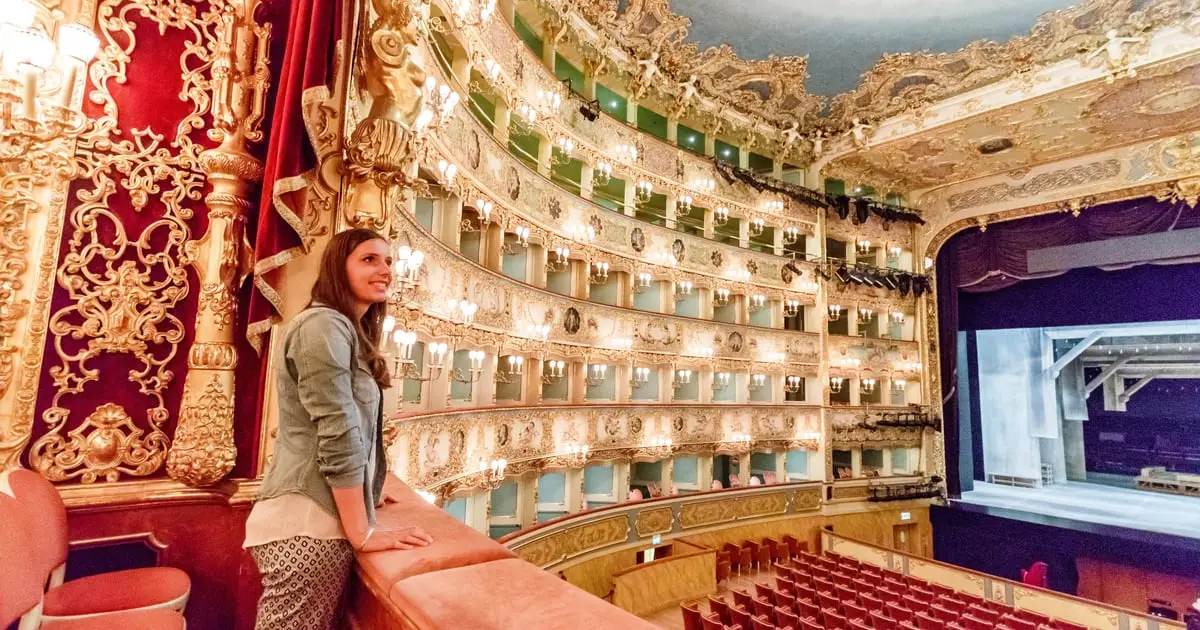 from $13
Most reviewed
Venice: La Fenice Opera House Entry Ticket with Audio Guide
A self-guided visit of the rebuilt Fenice: the gilded hall, the royal box and the Maria Callas room, audio guide included.
Check Availability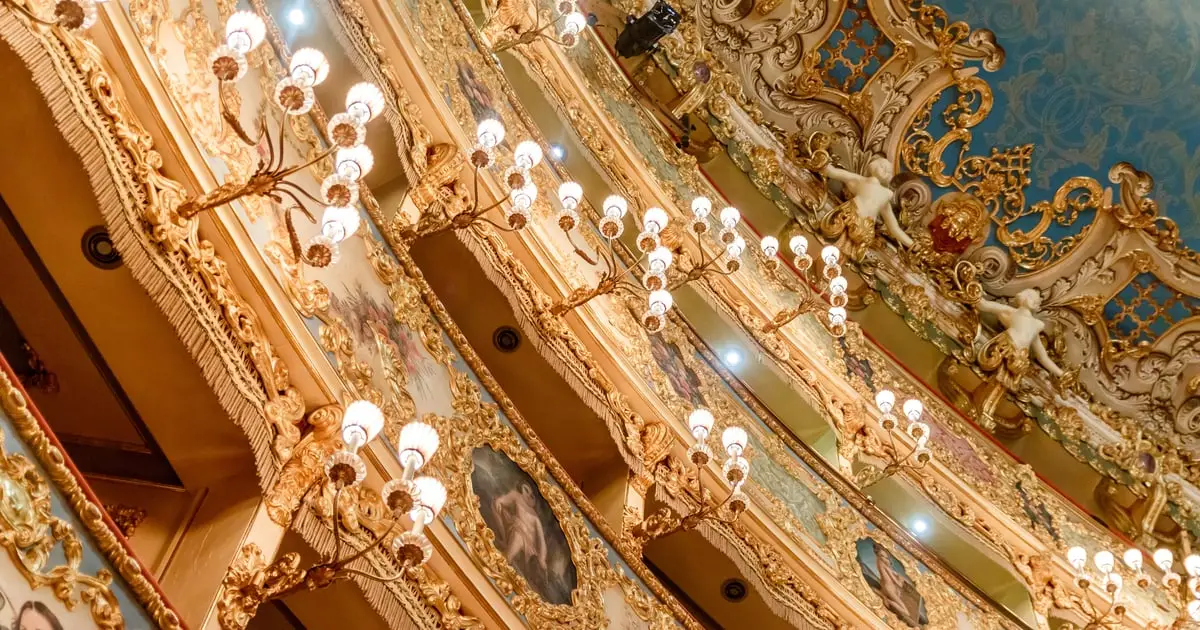 from $28
Guided
The Majestic Teatro La Fenice: Guided Tour in Venice
A guide takes you through the foyers, the auditorium and the royal box, and tells the story of the two fires.
Check Availability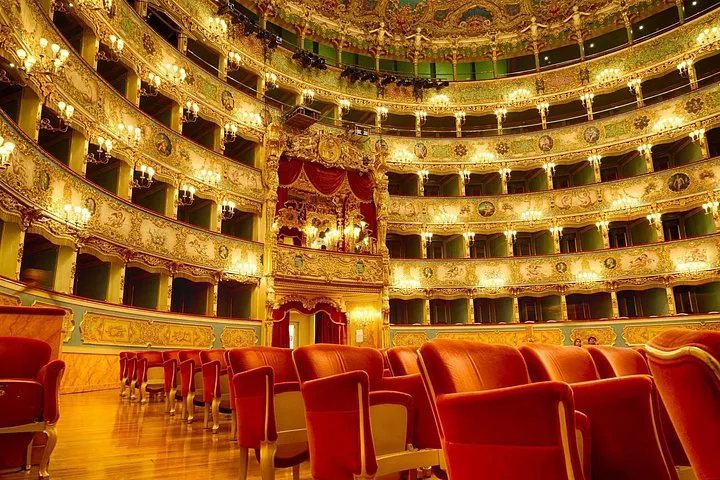 from $28.47
On Viator
Teatro La Fenice Tour in Venice
Entry to La Fenice with an audio guide for a self-paced visit of the hall and the royal box.
Check Availability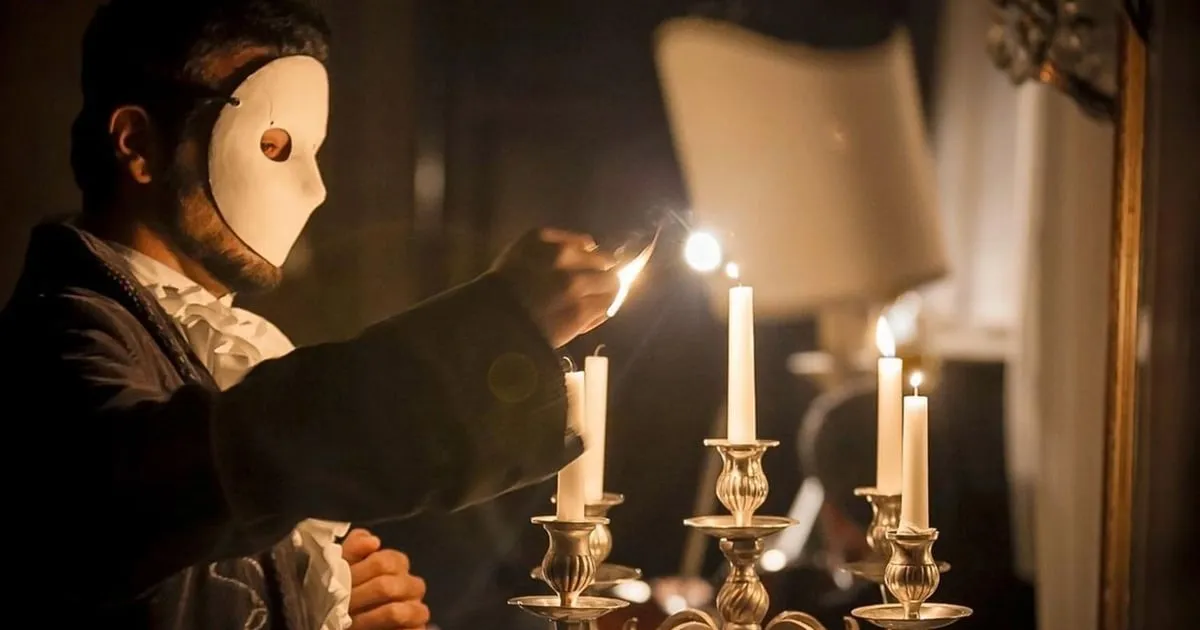 from $106
Top rated
Venice: Traveling Opera in a Historic Palace on Grand Canal
A full opera sung act by act in the rooms of Palazzo Barbarigo Minotto on the Grand Canal, a few metres from the singers.
Check AvailabilityPrices, ratings and details are the platform's own. dollar figures are the listed prices — the platform bills in your account's currency.
What La Fenice is, and why it matters
A short orientation before you book: what kind of theatre this is and why people cross the city to see it.
The phoenix that burned three times
La Fenice means The Phoenix. The name was chosen in the 1790s by a society of Venetian box-holders who had lost their previous house, the Teatro San Benedetto, in a legal dispute after that theatre burned in 1774. They named the new building after the bird that rises from its own ashes, and the name kept proving itself.
Fire destroyed the theatre again in 1836, started by a newly installed Austrian heater. The rebuilding took less than a year and the house reopened on 26 December of the same year. The third fire, on a night in January 1996, was arson during restoration works and left only the exterior walls. The theatre was rebuilt as it was, where it was, to a plan by Aldo Rossi, and reopened in December 2003.
A premiere house for Verdi and the bel canto composers
La Fenice is one of the most famous landmarks in the history of Italian theatre. In the nineteenth century it premiered major works by Rossini, Bellini, Donizetti and Verdi. Verdi's Rigoletto had its premiere here in 1851 and La traviata in 1853, both written for this room.
Great conductors worked the pit: Toscanini, Bernstein, Karajan, Abbado and Muti among them. After the 2003 reopening the tradition of the Venice New Year's Concert began. If you want to compare this house with the other big names, our guides to La Scala, the Teatro di San Carlo and the Arena di Verona cover the rest of the big four.
Is La Fenice worth visiting?
Yes, and it suits even a short stay. The theatre sits on a quiet campo a few minutes from St Mark's Square, the visit takes about an hour, and you see the gilded auditorium from the stalls and boxes rather than from a distance. The Maria Callas exhibition room is included.
The one caveat is rehearsals: visits stop at short notice when the stage is in use, so book a slot and check the theatre calendar the day you go. That risk applies to every option here, in every city.
What you see inside, in walking order
The visit route runs from the entrance on Campo San Fantin through the foyer and Sale Apollinee, up to the boxes, and ends at the Callas room.
Entrance, foyer and the Sale Apollinee
You enter from Campo San Fantin 1965, the small square that gives the theatre its calm setting. The foyers and the Sale Apollinee, the elegant rooms above the entrance that survived both the 1836 fire and much of the 1996 one, come first. They host displays about the theatre's history and are where the guided tour route begins.
The audio guide is available in Italian, English, German, French and Spanish.
The auditorium and the royal box
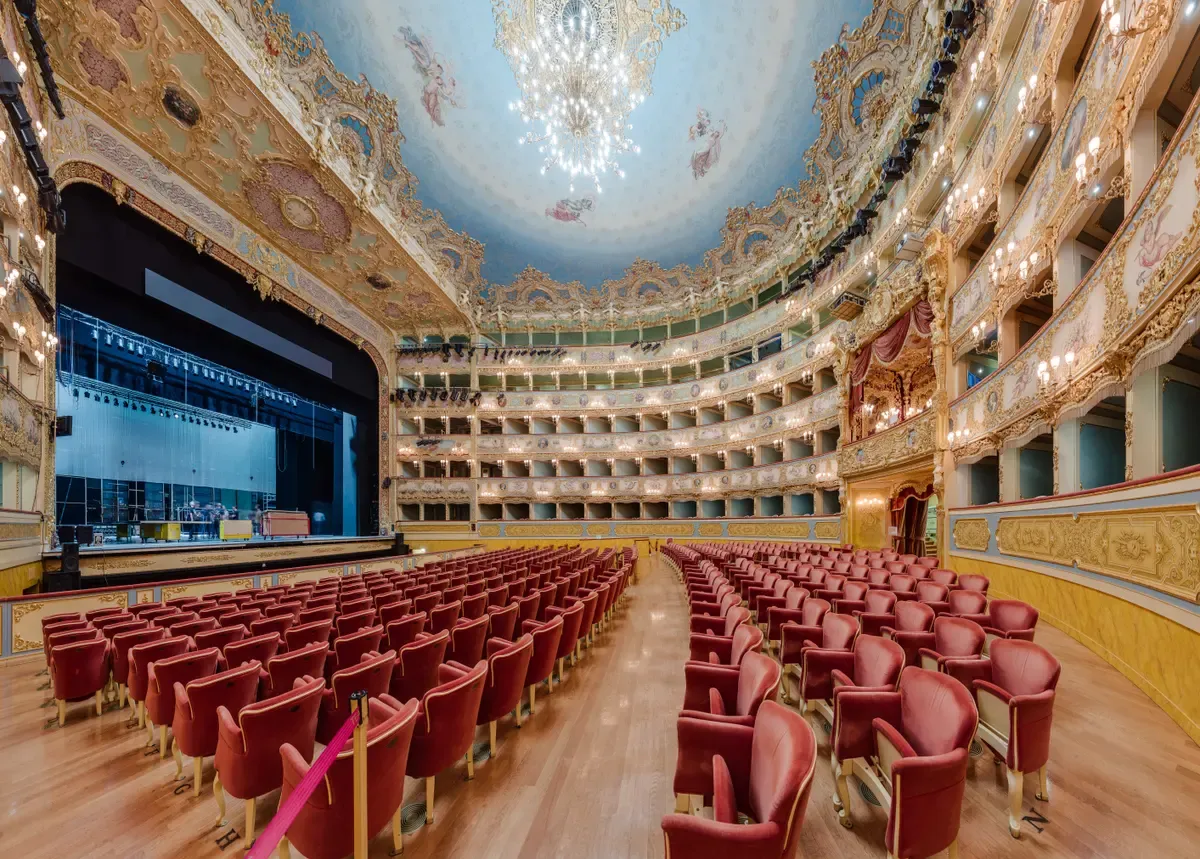
The heart of the visit is the horseshoe auditorium: five tiers of boxes, gilded and painted, rebuilt to look exactly as the nineteenth-century house looked. You see it from the stalls floor and from at least one box, which is the best photograph of the day. The royal box is on the route, and your guide or audio guide will point out where La traviata was first sung in 1853.
Look up at the ceiling and chandelier, both part of the faithful reconstruction.
The Maria Callas room
The visit ends in the room dedicated to Maria Callas, who sang at La Fenice in the years after the war. Costumes, photographs and documents tell the story of her Venice seasons. It is small, so it can feel busy in the middle of the day.
Then you are back out on the campo, ten minutes on foot from the Teatro Malibran, the Fenice foundation's second venue near the Rialto, and from the palace venues where evening concerts run.
Hours, dress code and quiet times
When to go, what to wear, and how the theatre's schedule can change your plan on the day.
Opening hours and rehearsal days
The theatre is open for visits daily from 09:30 to 18:00. The timetable is subject to last-minute changes for rehearsals, and this is the single most common complaint in reviews: the hall can close while the stage is set. Book the entry ticket for the hour you want and check the theatre's calendar before you set out.
The box office on Campo San Fantin is open every day from 10:00 to 17:00, and leftover performance seats may be sold at a last-minute price one hour before curtain.
The dress code
For daytime visits there is no dress rule beyond ordinary decorum. For performances the theatre's own code is specific: black tie is recommended on the season opening night, formal dress on other premieres, shirt and jeans are allowed on other evenings, and smart casual is fine at matinees. Shorts and sleeveless T-shirts are refused.
For the full etiquette, including how this compares with La Scala and the Arena, see our opera dress code guide.
When it is quiet
The theatre publishes no visitor numbers, so this is our estimate. The first hour after opening at 09:30 and the last hour before 18:00 are usually the calmest, while late morning and early afternoon fill with tour groups. In the opera season, which runs from autumn into spring, matinée and evening performance days mean the visit may end early.
High summer is busier in the city but the hall itself has no seasonal shutdown listed.
Getting there
La Fenice sits in the San Marco district, close to St Mark's Square and the Accademia bridge.
On foot from the vaporetto stops
The theatre is at Campo San Fantin 1965, between La Fenice's namesake campo and the freelance alleys of San Marco. From the San Marco Vallaresso vaporetto stop by St Mark's Square, walk west through the Mercerie and follow signs to La Fenice. From the Accademia stop on the Grand Canal, cross to the San Marco side and walk north for about ten minutes.
Walking times are our estimate. Venice has no cars this far in, so comfortable shoes matter more than any ticket.
Finding the door
The facade is modest and easy to walk past: a plain neoclassical front on a small campo, with the theatre's canal-side entrance on the other side giving direct access to the stage for scenery, as the original design intended. The audio guide ticket and the guided tours all meet here. Arrive ten minutes before your slot.
If you are staying nearby, our where to stay for opera guide lists the districts that put you within a short walk.
How much time to give it, and three ways to plan the day
The visit itself is about an hour. What you pair it with decides the rest of the day.
Three routings that work
Most people give La Fenice an hour and add either a palace opera in the evening or a second theatre. The table below sets out three plans: a quick stop, a music day, and a full opera day. Combine the theatre with the Rialto or St Mark's in the morning and the palace performance after dinner, and you have done the best of opera in Venice in one day.
| Routing | Plan | Time needed |
|---|---|---|
| Quick look | Morning visit with the audio guide ticket, then St Mark's Square and lunch | About 2 hours total, our estimate for the walk and visit |
| Music day | Theatre visit in the afternoon, Traveling Opera at Palazzo Barbarigo Minotto in the evening | Half day plus a 2-hour evening performance |
| Two-theatre day | La Fenice in the morning, the Teatro Malibran near the Rialto in the afternoon, a Vivaldi concert to finish | A full day, walking times our estimate |
How La Fenice came to be
Eight dates that explain the theatre you will walk through.
-
1774
The San Benedetto burns
Venice's leading opera house burns to the ground, setting the story in motion.
-
1787
The box-holders lose their theatre
A court ruling gives the rebuilt San Benedetto to the Venier family, and the expelled Nobile Società di Palchettisti decides to build a grander house of its own.
-
1790
Selva wins the competition
Giannantonio Selva's neoclassical design is chosen from 29 entries for the new theatre.
-
1792
La Fenice opens
Work took 18 months and the house opened in May with Paisiello's I giuochi d'Agrigento.
-
1836
The first fire
An Austrian heater starts a fire that destroys the house in three days, sparing only the foyer and the Sale Apollinee.
-
1837
Rebuilt in under a year
The Meduna brothers reconstruct the theatre and it reopens on 26 December, the day after boxing-day audiences returned.
-
1851 and 1853
Verdi premieres
Rigoletto and then La traviata are first performed on this stage.
-
1996 and 2003
Arson and rebirth
A fire during restoration works destroys the house, leaving only the exterior walls, and it reopens in December 2003 after rebuilding as it was.
Sources: Wikipedia's La Fenice article and the Teatro La Fenice theatre website.
Dos and don'ts at La Fenice
Do
- Book a time slot for the entry ticket and check the theatre calendar the same morning,Keep your audio guide ticket confirmation on your phone for the door,Dress up if you attend a performance: shirt and jeans are fine on ordinary evenings, formal on premieres,Look into the hall from a box as well as from the stalls floor,Add the Maria Callas room at the end of the route, it is included in the ticket,Pair the visit with an evening palace concert from our opera in Venice guide
Don't
- Don't assume the hall is open: rehearsals stop visits at short notice,Don't wear shorts or a sleeveless T-shirt to a performance, entry is refused,Don't arrive late for the palace opera: seats are unassigned and doors open 30 minutes before,Don't book the Viator audio guide option expecting a live guide, it is self-paced,Don't confuse opera concerts in churches and palaces with a staged opera at the theatre itself,Don't plan a second indoor stop straight after if a matinée is on, the visit may end early
Five things most visitors do not know
Details that make the visit make sense.
The list
Small facts that change how you look at the building:
- The name comes from a legal defeat. The box-holders lost the Teatro San Benedetto to the Venier family in 1787 and named the new house after the phoenix to mark their rebirth Wikipedia: La Fenice.
- The 1836 fire was started by a recently installed Austrian heater, and newspapers reported hotspots still smouldering 18 days later Wikipedia: La Fenice.
- The 1996 fire was arson during restoration works and destroyed everything but the exterior walls Wikipedia: La Fenice.
- The Venice New Year's Concert tradition began to celebrate the theatre's 2003 reopening Wikipedia: La Fenice.
- The canal on the far side of the building was part of the original design, giving scenery barges direct access to the stage Wikipedia: La Fenice.
La Fenice on the map
The theatre and the places within a short walk that pair well with it.
- 1 Teatro La FeniceThe opera house this guide covers, open for visits daily from 09:30 to 18:00.
- 2 Palazzo Barbarigo MinottoThe Grand Canal palace where the Traveling Opera is sung act by act in the evening.
- 3 Scuola Grande di San TeodoroA baroque venue near the Rialto where I Musici Veneziani play Vivaldi's Four Seasons.
- 4 Rialto BridgeThe city's crossing of the Grand Canal and the walk past the Fenice foundation's second venue, the Teatro Malibran.
- 5 St Mark's SquareVenice's main square, a few minutes' walk east of the theatre and the start of most visitor routes.
- 6 Chiesa di San VidalA church venue close to the Accademia where Vivaldi concerts run most evenings.
Numbers match the pins on the map.
Nearby: three easy combinations
All three are within a short walk of Campo San Fantin. Walking times are our estimate.
Palazzo Barbarigo Minotto
A Grand Canal palace where a full opera is sung act by act, one room per act, with the audience a few metres from the singers. It is the best evening complement to a daytime La Fenice visit, and the details are in our opera in Venice guide.
5 min walk (our estimate) Read the guideTeatro Malibran
The Fenice foundation's second theatre, near the Rialto, used for performances outside the main house. Its box office and season share the Fenice's website, and we cover the setting in opera in Venice.
10 min walk (our estimate) Read the guideSt Mark's Square
The square every Venice route passes through, and the practical anchor for finding the theatre's quiet campo. If you want a hotel within walking distance of both, start with our where to stay for opera guide.
7 min walk (our estimate) Read the guideLa Fenice: questions visitors ask
Is La Fenice worth visiting?
Yes. It is one of the most famous opera houses in the history of Italian theatre, the gilded auditorium is open daily, and the visit takes about an hour. The one risk is rehearsals, which stop visits at short notice, so check the calendar the day you go. Start with the entry ticket.
What does La Fenice mean in Italian?
It means The Phoenix, the mythical bird that rises from its own ashes. The box-holders who built the theatre in the 1790s chose the name after losing their previous house, and it proved fitting: fire destroyed the building in 1836 and again in 1996, and it was rebuilt both times.
Why is Teatro La Fenice famous?
Three things: its premieres, its conductors and its fires. Verdi's Rigoletto and La traviata were first performed here, Toscanini, Bernstein, Karajan and Abbado conducted here, and the theatre rose from three fires, most recently arson in 1996, to reopen in 2003.
What is the dress code for opera at La Fenice?
Black tie is recommended on the season opening night and formal dress on other premieres. On ordinary evenings shirt and jeans are allowed, and matinees are smart casual. Shorts and sleeveless T-shirts are refused entry. Daytime visits have no dress rule. More in our opera dress code guide.
Can I buy La Fenice tickets for performances here?
No. Tickets for the opera performances themselves are sold by the theatre's own box office on Campo San Fantin, open daily from 10:00 to 17:00. Leftover seats may be sold at a last-minute price one hour before a show. Our listings cover theatre visits and palace concerts.
How long does a visit to La Fenice take?
Plan on about an hour with the audio guide, which covers the auditorium, the royal box and the Maria Callas room in five languages. Guided tours also run one hour. If a rehearsal is on, the hall may close early, so a morning slot gives you the best odds.
What else can I see at night near La Fenice?
A full opera is performed room by room in Palazzo Barbarigo Minotto, a few minutes from the theatre, and Vivaldi and opera-aria concerts run in churches and scuole across San Marco. These are concerts and palace stagings, not performances inside La Fenice itself. See our opera in Venice guide.
How does La Fenice compare with La Scala?
La Fenice is smaller and more intimate, and its visit is self-guided with an audio guide, while La Scala pairs a theatre museum with a box-level view of the hall. Both stop visits for rehearsals. If you are touring the country, our opera houses in Italy guide compares all the major houses.
La Fenice on film
Three short films that show La Fenice and the way in, worth a look before you pick a tour.
VENEZIA || Inside LA FENICE THEATRE
Filmed by The World Through My Eyes: La Fenice as you will see it on the day.
Video: The World Through My EyesTeatro la Fenice | Venezia | Tour completo | 4K |
Filmed by TRAVEL AROUND THE WORLD: La Fenice as you will see it on the day.
Video: TRAVEL AROUND THE WORLDLa Fenice opera house, Venice, Italy.
Filmed by 99archi: La Fenice as you will see it on the day.
Video: 99archiPrices, hours and terms are set by the venue or operator and confirmed at checkout.
We may earn a commission if you book through one of our links, at no extra cost to you. Full affiliate disclosure